Friday, April 18, 2014

Will Our Pets (and Other Animals) Greet Us in Heaven?


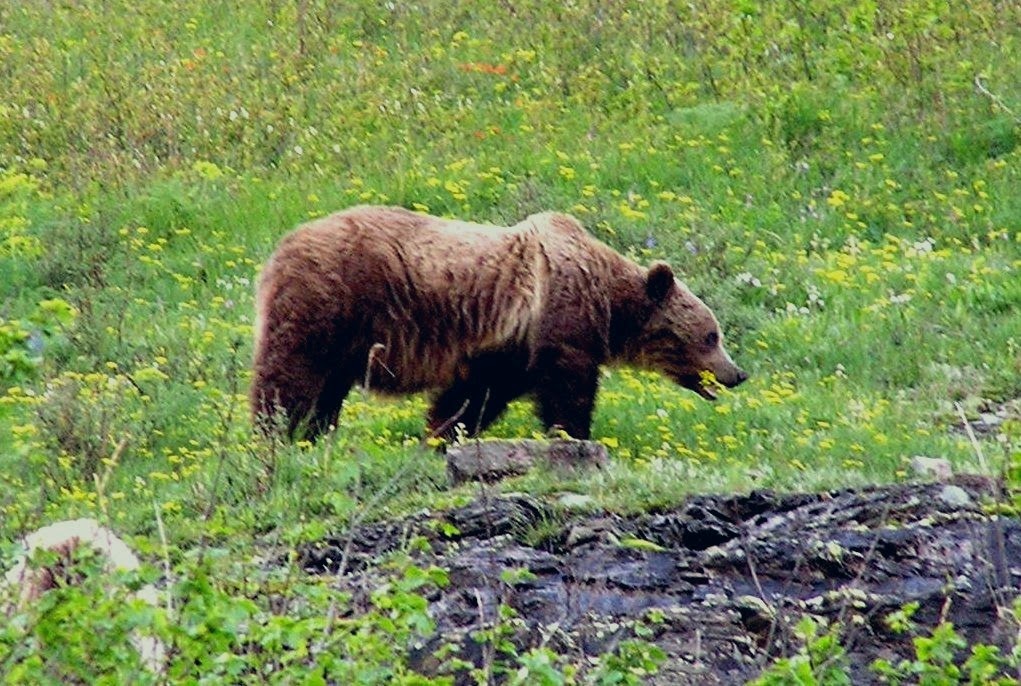
Al Hochrein photograph 
  
Part Ten:   More Arguments against the Immortality of Animal Souls

In my previous article, we examined the three Bible passages skeptics most frequently use to justify their rejection of the immortality of animal souls.  I explained why none of the passages are relevant, that is, none of them actually speak to the issue of animal immortality. Therefore, they all three fail as valid arguments against the existence of animal souls. In addition to these three Scripture passages, however, there are three other arguments skeptics often use to refute the likelihood that earth-bound animals possess immortal souls, and therefore they will not inhabit the eschatological new heaven and earth.  In this blog article, we’ll briefly examine them and see why they too are invalid arguments.

Only humans were created in God’s image, therefore animals do not have immortal souls

This is probably the most common argument used to “prove” that animals are merely physical creatures without immortal souls. The assumption is that because only humans were created in God’s image, animal souls expire at physical death.

It is unarguable that humans have a special relationship with God that animals do not share. We are the “crown” of God’s creation (Ps. 8:4-8); only people were made in His image (Gen. 1:27). By virtue of this, humans alone possess the communicable attributes of God, and we are of far greater value than animals (Matt. 6:26). Moreover, as far as we can tell, at least here on earth, only humans are innately aware that God exists (Eccl. 3:11). And as I explained in a previous article, animals have souls, but not spirits. Thus, they do not have the spiritual connectedness with God that humans enjoy.

But why should this mean that animals can’t have immortal souls? It doesn’t.  God could bless animals with immortal souls if He chooses to do so, and it’s presumptuous to say He can’t. Theologian Andrew Linzey sums it well: 

There is something theologically odd about all discussions of immortal souls—the plain absurdity, no less, of humans deciding for themselves which essential or substantial qualities qualify them for eternal life and which may or may not exclude animals. . . . Eternal life is God’s own gift; it is not something which we can merit. . . . If full weight is given to God’s gracious and wide-ranging activity in creation, then it is inconceivable that the God who redeems will be less than the God who creates. In this sense the issue of animal immortality is wholly integral to the view that God does actually care not only for the whole world but for each and every individual being within it, including—of course—sparrows. (Animals on the Agenda, 119)

Human dominion over animals means they do not have souls 

This argument claims that because the human race was instructed to have “dominion” over the animal kingdom (Gen. 1:28, KJV), animals do not possess immortal souls. This is probably the weakest argument against animal immortality. Not only is it clearly a non sequitur, but it doesn’t make sense. Space does not allow me to provide an analysis of what dominion means when examined within its full biblical context, but most theologians agree that dominion means stewardship. It denotes mankind’s caretaker role in creation; it doesn’t give people a license to use animals anyway we please. I devote five chapters in my book, Should Christians Be Environmentalists?, to  demonstrate this fact (Kregel Publications, 2012).

We saw in parts two through five in this blog series that God loves, enjoys, provides for, and values the creatures He created. If human dominion (stewardship) over creation teaches us anything, it’s that God desires for all animal life to fulfill the purposes for which He created them. Animals have far more value to God than just their instrumental use for humans. It’s reasonable to conclude from what we’ve seen in previous articles that God’s love for non-human life will not end with their physical death. There is no reason to assume that His love for the animals inhabiting the Earth today will not extend into eternity; that God has more in mind for animals than their short sojourn on this present Earth.

Animals lack the mental attributes that indicate the presence of an immortal soul

This argument claims that animals do not have immortal souls because they lack soul-like qualities. In other words, animals lack the cognitive and emotional attributes humans associate with the existence immaterial souls in us. This may have been a legitimate argument decades ago, but no longer. Since the mid-twentieth century, ethologists (scientist who study animal behavior) have demonstrated that many complex animals exhibit devotion, grief, empathy, sorrow, affection, play, joy, inter-species friendships, altruism, and other mental states analogous to humans. Some mammals and birds even exhibit thought-driven behaviors, and in some cases, a degree reflective reasoning that can trump instinct. Such qualities in humans demonstrate the existence of an immaterial mind distinct from our physical brains—the essential feature of a soul. If some animals possess limited but  similar cognitive and emotion states as humans, why would it not reflect immaterial minds and thus souls? The fact that these mental states are not as fully developed and intensely experienced in animals as they are in humans does not lesson the likelihood of their origin in immaterial minds/souls. This is such an important concept to grasp—that many sentient animals exhibit soul-like qualities—that I’ll spend the next one or two blog articles examining the scientific evidence for this in more detail.

But let me add this for now. Even if animals do not possess human-like thoughts and emotions and instead functioned totally on instinct, there is still no reason why God would not grant them eternal souls and extend His love for them into the next life. He may do so for no other reason than for His own pleasure—and the pleasure they will give humans. On this earth, wildlife is what makes the wilderness wild,  and numerous varieties of animals are our friends and companions. Nothing in Scripture suggests that the new heaven and earth will be inhabited only by redeemed humans, or that animals will not continue their role in the restored new earth. Indeed, the Old Testament in particular says much about animals in God’s eternal kingdom—as we’ll see in future articles. I like the way Randy Alcorn put  this in his acclaimed book, Heaven.

Why [do] so many people find such companionship, solace, and joy in their pets?. . .  I believe it’s because of how God has made animals, and us….It would be simple for him to re-create a pet in Heaven if he wants to. He’s the giver of all good gifts, not the taker of them. If it would please us to have a pet restored to the New Earth, that may be sufficient reason.”
(p. 385)

Next week we’ll examine scientific support for the biblical evidence that at least sentient animals possess an immaterial dimension (a mind/soul), which is distinct from their physical brains. This clearly supports the reality of immortality (new life after physical death) for animals—just as it does for humans.


*  The blog articles in this series are adapted from copyrighted material and may not  be reproduced in book or article form, either electronically or in print, without my written permission. But feel free to send links to these articles, with a brief introduction, to your personal email list, Facebook friends and groups, or other people who may enjoy them. Or post a link on your own website. If you would like to be added to my personal blog email list (people who receive an email notice whenever I post a new blog article), contact me through my website: www.danstory.net.

Friday, April 11, 2014

Will Our Pets (and Other Animals) Greet Us in Heaven?


Dan Story photograph


Part Nine:   “Animals Don’t  Have Immortal Souls!”—Objections Overruled!

In this and the following blog article, I’ll examine the major arguments raised by skeptics who reject the idea of animal’s possessing immortal souls. In this article I’ll focus on the three Bible passages skeptics most frequently quote to support this claim. As you read them, notice that the first two do not even speak to the issue of animals souls. (All Scripture from the New International Version.)

Psalm 49:10-20: 
 The first passage is Psalm 49:10-20, in particular verses 15 and 20: “But God will redeem my life from the grave; he will surely take me to himself….A man who has riches without understanding is like the beast that perishes.” At first glance this passage may seem to imply that godly men will be rescued from the grave (resurrected) but animals will perish. Why this interpretation? Because skeptics assume the passage is focusing on spiritual death. Thus, since animals allegedly lack eternal souls, at death they decay in the grave (14) while humans, who do have eternal souls, eventually rise from the grave (15). But is this what the passages is concerned about? Not at all. It explains that both humans and animals die physically (12); the fate of our bodies is no different than theirs—we all return to dust.

Besides the mistaken assumption that the passage is focusing on spiritual death—which it’s not—this interpretation is grossly out of context. The passage says nothing about the eternal state of animals. It’s speaking about the fate of a godless rich man (represented as sheep—v. 14) who “will take nothing with him when he dies” (17). In other words, just as animals have no material possessions to carry to the grave, neither do humans. When a person dies, regardless of the riches or honor he or she enjoyed in this life, they take nothing with them to the grave—just like animals. The passage says nothing about animal souls or their eternal destiny.

Matthew 25:31-46:
The second passage that skeptics believe refutes the notion of animals possessing immortal souls is Matthew 25:31-46, especially verse 46: “Then they [the unrighteous] will go away to eternal punishment, but the righteous to eternal life.” But read the entire passage. It’s not talking about animals at all. Jesus is distinguishing righteous people (represented by the sheep on His right) from unrighteous people (the goats on His left—v. 32). The passage is saying nothing whatsoever about whether or not animals (i.e. the sheep and goats) possess souls. Indeed, if it were speaking about the destiny of animal souls, at least some (the sheep) would “go away . . . to eternal life” (v. 46).

Ecclesiastes 3:19-21:
Probably the most common passage used to discredit the immortality of animal souls is Ecclesiastes 3:19-21:
For the fate of the sons of men and the fate of beasts is the same. As one dies, so dies the other; indeed, they all have the same breath (ruach--spirit) and there is no advantage for man over beast, for all is vanity. All go to the same place. All came from the dust and all return to the dust [i.e. their physical bodies]. Who knows that the breath (ruach--spirit) of the beast descends downward to the earth?” 

 Skeptics interpret this passage to mean that while the bodies of people and animals both decay (turn to dust), human immortal spirits go to Heaven but animal spirits (souls) do not. Again, this is an assumption. The author points out that human and animal bodies “all go to the same place.” Then he asks a question (not make a statement): “Who knows” if the breath (i.e. ruach—spirit) of animals “descends downward to the earth?” The most obvious interpretation of this passage would seem to be the opposite of the skeptic’s. If the “fate” of human and animal bodies is the same, that is, “all go to the same place” (physical death—dust), the author may well have assumed that the spirits of humans and animals also go to the same place. But perhaps he wasn’t absolutely certain about it (just like many Christians), so he asked the question: “Who knows that the breath (ruach--spirit) of the beast descends downward to the earth?”

Some skeptics have attempted to support their interpretation by arguing that verse 12:7 clarifies the issue. When the teacher says,  “and the dust returns to the ground it came from, and the spirit returns to God who gave it,” they assume that the dust returning to the ground is the animal’s spirit in verse 3:21. Thus, animal spirits are extinguished at death while human spirits ascend to God. This is pure speculation. In context of all chapter twelve, verse 12:7 is obviously referring to just people. It’s saying that people’s spirits go to God while their physical bodies return to dust. It says nothing about animal spirits (souls).

As these three examples illustrate, the passages skeptics rely on to justify their belief that animals do not possess immortal souls, in reality, say no such thing. To conclude otherwise requires the skeptic to read his or her own presumptions back into the text.

Is There a More Fundamental Reason People reject the Immortality of Animals Souls?

It’s true that animals do not possess spirits in the tripartite sense of a unique spiritual connection with God, which only humans enjoy by virtue of being created in His image (see part seven). But this is no reason to conclude that their souls are merely corporeal and without God-given eternal qualities. The fact is nothing in Scripture speaks about the annihilation of animal souls.  Thus, if animals do have souls, it seems reasonable they would be immortal—just as in humans.

I believe that the reason many people reject the immortality of animal souls is not for biblical reasons, but for philosophical reasons. They worry that if we admit animal souls are eternal, we are elevating animals to human status or are acquiescing to some kind of pagan, earth-based religion where there is no value distinction between people and animals. There is no reason to have this concern. Animals were not created the same as humans (1 Cor. 15:39), nor do animals have the same value to God as people (Matt. 6:26). In the future new heaven and earth, we can expect these distinctions to remain. (We’ll look at this in detail later.) Just because animals have souls that survive physical death does not change their status in the hear-and-now nor in the age to come. Animals in heaven will still be just animals.

*  The blog articles in this series are adapted from copyrighted material and may not  be reproduced in book or article form, either electronically or in print, without my written permission. But feel free to send links to these articles, with a brief introduction, to your personal email list, Facebook friends and groups, or other people who may enjoy them. Or post a link on your own website. If you would like to be added to my personal blog email list (people who receive an email notice whenever I post a new blog article), contact me through my website: www.danstory.net.

Friday, April 4, 2014

Will Our Pets (and Other Animals( Greet Us in Heaven?


Dan Story photograph

Part Eight:   “Animals Have Souls—but Are They Immortal Souls?”

We saw in the previous blog article that at least sentient animals have souls (animals that are able to feel and perceive things). Although most theologians agree with this, many assume that animal souls, unlike human souls, are mortal—they are extinguished when the animal dies. In order to discern which view is correct, that is, whether or not animals have immortal souls, can be determined to a large degree on the meaning of two Hebrew words: nephesh (soul) and ruach (spirit). So the task at hand is to flesh out their meanings within the context of how they are used in passages relating to animals. If these two words describe human souls and spirits (which we know are immortal) and also refer to animal souls, it’s reasonable to conclude they too are immortal.

Nephesh:  The Hebrew word nephesh is translated soul 238 times—more than a hundred times its second most common usage (life). Nephesh, when translated as “soul,” refers to our immaterial self, that part of our being that continues to exist once it’s released from our bodies upon physical death. Does this mean the word nephesh, when speaking of animals, indicates that they have souls? The following passages suggest that it does. (Scripture quotes from the New American Standard Bible.)

Genesis 1:20: “Let the waters team with swarms of living creatures” (nephesh—souls).
Genesis 1:24:  “Then God said, ‘Let the earth bring forth living creatures (nephesh--souls) after their kind. . . .’”
Genesis 1:30:  “. . . and to every beast of the earth and to every bird of the sky and to every thing that moves on the earth which has life” (nephesh--soul). 
Genesis 2:19:  “. . . and whatever [Adam] called a living creature (nephesh--soul), that was its name.” 
Job 12:10: “In whose [God’s] hand is the life (nephesh—soul) of every living thing. . . .
Proverbs 12:10:  “The righteous man has regard for the life (nephesh--soul) of his animal.”

Some skeptics argue that in the above passages soul is referring to an animating “life force,” not an immortal soul. In the following passages, however, spirit is also applied to animals. So even if soul (nephesh) means an animating life force, spirit (ruach) would still imply immortality of animal souls—given soul and spirit are synonymous in animals. The following passages illustrate this.

Ruach:  The Hebrew word ruach is translated breath, wind, or spirit. However, it’s used 203 times for spirit—more than twice it’s next most common usage (wind). The following passages show that the Hebrew word translated spirit, just like the Hebrew word translated soul, is ascribed to both humans and animals: 

Genesis 6:17:  “Behold, I, even I am bringing the flood of waters upon the earth, to destroy all flesh [human and animal] in which is the breath [ruach—spirit] of life.”
Genesis 7:15: So they went into the ark to Noah, by twos of all flesh in which there was the breath [ruach—spirit] of life.
Genesis 7:22:  . . . of all that was on the dry land, all in which nostrils was the breath of the spirit [ruach] of life, died.
Psalm 104: 29:  You hide Your face, they [the animals] are dismayed; You take away their spirit [ruach] they expire and return to their dust.
Ecclesiastes 3:19:  For the fate of the sons of men and the fate of beasts is the same. As one dies, so dies the other; indeed, they all have the same breath [ruach—spirit] and there is no advantage for man over beast.”

This brief word study shows that the Hebrew words translated soul and spirit are applied to both humans and animals. In light of this, if human souls are immortal it seems reasonable and probable that animal souls are also immortal—especially since nothing in the Bible tells us that animal souls are extinguished upon physical death. Still, this alone may not convince some skeptics. They typically raise several objections. We’ll examine them in the next couple blog articles.

*  The blog articles in this series are adapted from copyrighted material and may not  be reproduced in book or article form, either electronically or in print, without my written permission. But feel free to send links to these articles, with a brief introduction, to your personal email list, Facebook friends and groups, or other people who may enjoy them. Or post a link on your own website. If you would like to be added to my personal blog email list (people who receive an email notice whenever I post a new blog article), contact me through my website: www.danstory.net.


Friday, March 21, 2014

Will Our Pets (and Other Animals) Greet Us in Heaven? *


Steve McSparran photograph

 Part Seven:   “Do Animals Have Souls?

There seems to be two reasons why Christians assume that animals do not have souls.  Some reject the idea because the Bible only speaks about people going to heaven. It doesn’t provide straightforward information on the eternal destiny of animals—so it’s assumed they do not possess souls. Other Christians acknowledge that at least sentient animals do possess souls, in terms of some kind of animating life force. But they assume that God did not intend for animals to survive physical death. Therefore, their souls are extinguished when life ends.

I reject both views. I believe a compelling biblical case can be made that animals not only possess souls, but also their souls will continue to exist after physical death. Demonstrating this is the goal of the present and following blog article. After this, I’ll address the common arguments against such a conclusion.

What Does the Bible Say?

Theological studies on whether or not animals have souls, especially immortal souls, have not been high on the church’s agenda. Nevertheless, theologians who have commented on the subject seem to agree that animals do have souls. Gary Habermas and J.P Moreland point out that “throughout the history of the church, the classic understanding of living things has included the doctrine that animals, as well as humans, have souls. Christians have maintained this because the Bible teaches that animals have souls” (Habermas and Moreland, Immortality; The Other Side of Death,
p. 51). Even so, many theologians down through the ages have maintained that animal souls are different from human souls in that animal souls are not immortal. Habermas and Moreland continue: “Even though the church has been quite clear about the existence of animal souls, there has been no consensus about the existence of animals in the afterlife, some Christians favoring the idea, some arguing against it, some remaining agnostic” (Ibid.). So the crux of the argument is not whether animals have souls, but whether their souls are immortal or whether they become extinguished at physical death. 

For Christians, whether or not animals have immortal souls depends on what the Bible has to say on the subject. This in turn hinges, to a large degree, on the definition and application of two Hebrew words translated in the Old Testament as “soul” and “spirit.”

Soul versus Spirit

Before we examine these two Hebrew words, something should be said about the disagreement among Christians on whether “soul” and “spirit” are synonymous or whether they are two distinct components of a human’s immaterial dimension. Some take the position that in the Bible the words for soul and spirit are used interchangeably, and therefore people are comprised of two parts: body and soul/spirit. There is biblical justification for this view, which is called bipartite.  For example, in John 12:27 Jesus said, “My soul has become troubled;” while in John 13:21 “He became troubled in spirit” (see also Gen. 41:8; Ps. 42:6; Matt. 27:50; Heb. 12:23; Rev. 6:9). In these cases, spirit and soul seem to be used interchangeably.      

Other Christians are tripartite and believe that the Bible teaches that people are composed of three distinct parts: body, soul, and spirit. These people view the body as the physical part of our being, the soul is associated with the immaterial “mind” (the seat of emotions, cognition, and will), and the spirit is that part of our being that relates specifically to the spiritual realm:  a Christian’s personal connectedness with God.  In support of the tripartite view, the Bible sometimes uses soul and spirit in the same verse, implying a clear distinction. For example, Job 7:11 say: “Therefore I will not keep silent; I will speak out in the anguish of my spirit [ruach], I will complain in the bitterness of my soul [nephesh].  Later he writes,  “In his hand is the life [nephesh—soul] of every creature and the breath [ruach—spirit] of all mankind (12:10). The New Testament makes it even clearer. The Apostle Paul wrote in 1 Thessalonians 5:23, “May your whole spirit [pneuma], soul [psyche] and body [soma] be kept blameless at the coming of our Lord Jesus Christ.” Likewise the author of Hebrews wrote, “The word of God is living and active. Sharper than any double-edged sword, it penetrates even to dividing soul [psyche] and spirit [pneuma]” (4:12).

The question is, if human souls are eternal, why wouldn’t animal souls be eternal? I believe they are. In Matthew 10:28, Jesus warned us not to “be afraid of those who kill the body [soma] but cannot kill the soul [psyche].” This clearly implies that the soul can exist without the body. So again, why would this not also be true of animal souls? If the same Greek word for soul is used for both humans and animals, it seems to me that animal souls, like human souls, will likewise survive physical death.

Although the Hebrew word for spirit (ruach) is sometimes applied to animals, as we’ll see in the next blog article, I’m choosing to use the word “soul” rather than “spirit” to describe an animal’s immaterial dimension. This avoids the risk of implying that animals have a “spirit” in the tripartite sense of a special connectedness with God, which only humans enjoy. I find no biblical evidence that animals have a spirit distinct from their souls. Thus, in the case of animals, the bipartite view seems correct.

With this said, we can now examine the Hebrew words for soul and spirit and see how they apply to sentient non-human life. This will be the topic of my next blog article.

*  The blog articles in this series are adapted from copyrighted material and may not  be reproduced in book or article form, either electronically or in print, without my written permission. But feel free to send links to these articles, with a brief introduction, to your personal email list, Facebook friends and groups, or other people who may enjoy them. Or post a link on your own website. If you would like to be added to my personal blog email list (people who receive an email notice whenever I post a new blog article), contact me through my website: www.danstory.net.